

The car in front of me must think it’s hilarious to drive at the lowest speed possible. I whip around them and turn right into the parking lot. I hold back a slew of curse words. I’m grumpy, but I don’t know why. I pull up to a parking space at the animal hospital. Watson squeals in the back seat. He gets anxious during car rides. An elderly hound dog with a brown spot on his eye, he has a vet appointment to help him with his arthritis. His whines fill the car. Upset thoughts fill my head.

When I took him last week, I was fine. The squeals of displeasure are nothing new. He always whines in the car. But today it seems like the whole world is out to annoy me. I can’t help but be bothered. I shove open my door, get out, and look over at the animal hospital.
That’s when I realize how much I am letting everything get to me. I shake it off like a bad dream. All the annoyances no longer loom over me. A moment earlier, the frustration seemed so real and convincing. Like a waterskier behind a boat, I felt tugged along by the energy of my upset. Being bothered seemed the only way to be. I help Watson out of the car and guide him toward the sliding glass doors. They open and he limps in.
That day I learned to respect the powerful illusion my upset thoughts can create. I also discovered I don’t have to let them overtake me. If I’m not lured into their reality, I can remain unbothered.
Bother seems like a fact of life. If we don’t get upset, worried, or stressed, we feel irresponsible. What if the opposite was true? Can bother make us less capable and responsive?
The Challenge
At the end of a coaching session, I had homework for my cleint, Frank.
“I challenge you to not be bothered for a whole week.”
He gave me a look that said, “good luck with that,” but he tried it anyway.
Guess what? It actually worked!
He still had thoughts about the usual stuff that bothered him, but he didn’t believe them as much. He reported a huge difference in his life: less worry, less stress, more ease.
The challenge didn’t work for him because it’s a good technique. Otherwise I’d make money just going around challenging clients not to be bothered for a week.
Frank didn’t let himself be as bothered because he “got it.” It made sense to him to be less upset. His life didn’t change. He faced the same challenges that week, but lived into a new understanding of how bother affects him.
I shared the following four understandings with Frank:
1: Bother isn’t Productive
“A part of us thinks that being bothered by life’s circumstances is helpful. We wouldn’t do it otherwise,” I told Frank.
“Being bothered feels productive. It creates the illusion that we are ‘doing something’ about our life. If we get upset, it validates that we have a problem.”
“You don’t have to love the crappy events that occur. You also don’t have to hate them. It seems like if we hate the “bad” aspects of our life, they will go away. Whether we love or hate them, challenges don’t vanish when we get upset by them. Bother doesn’t accomplish what it says it does. We get upset as a reaction. It’s extra, an accessory to what happens.”
2: Bother Doesn’t Mean You Care
“We can also think that if we get bothered, it means we care. Really take a look at that assumption. Caring is separate from being bothered. They don’t go together, they just seem to.”
I asked Frank, “Is it possible to care but not be bothered about something in your life?”
“It’s hard, said Frank. “I’m always bothered by stuff. Recently my ex wife really upset my daughter. It would normally get to me when she does that, but this time it didn’t. I still cared about my daughter, but I didn’t let it upset me as much. This time, I focused on being there to support my daughter. I was able to be there for her more because I didn’t take what my wife was doing so personally.”
“You’ve got it,” I said. “Not only do they not go together, but bother gets in the way of truly caring. When you become bothered, you make it about you. You focus on how it makes you feel. That’s the opposite of caring. We become more capable of caring when we focus our attention on others and not on our own reaction. Bother is based in judgement. Judgement gets in the way of caring. When you focused on your daughter rather than your own anger, you were able to care more. That’s a power you have, Frank.”
3: Bother Steers You into Problems
“Your mind lies to you about bother in other ways.” I told Frank. “It tells you that being bothered makes you better.”
“If you get mad enough at your life, your mind says, it will unlock the motivation to fix it. Yet, it never quite works out that way, does it? As the anger builds, motivation never comes. The more upset you get, the less motivation you feel. You get stuck in a cycle of anger, no motivation, and then anger about losing motivation.”
“What bothers you most?” I asked.
“I should be retired and living the life I want. I’m tired of working so hard at a job that gets in the way of coaching and adventure,” Frank said.
“When you get upset about your job and not being retired, it won’t motivate you.” I answered. “The bother keeps you trapped.”
“The focus on what you don’t want means you miss what is good for what could be better. This negative focus highlights the negative aspects of your life. What you don’t want grows in your mind until it’s all you think about. You can’t make your life better if you only see what you don’t want. The mind tells you being bothered will help you avoid the potholes of life, but it steers you right into them.”
4: No bother is possible
“It can seem like being bothered is the only way to be.” I continued. “It’s not. You can open yourself to infinite responses to life’s challenges. Bother is an old habit of thinking that you don’t have to pay attention to anymore. Set it aside to create room for new possibilities.”
Being unbothered clicked for Frank that week because he was open to the idea. If he didn’t think it was possible, he wouldn’t have even tried. He would have listened to thoughts that told him that being bothered was a fact of life. Instead, he questioned that reality. He leaned into the idea that he could be at peace in any circumstance. Upset, stress, and worry are not an inherent part of any situation he, or anyone else, meets in life. They seem inseparable from life events, but they are an independent creation of the mind. He saw the possibility of a new life with no bother.
Three days after our session, I sent Frank a picture of Winnie the Pooh that said “Oh bother.”
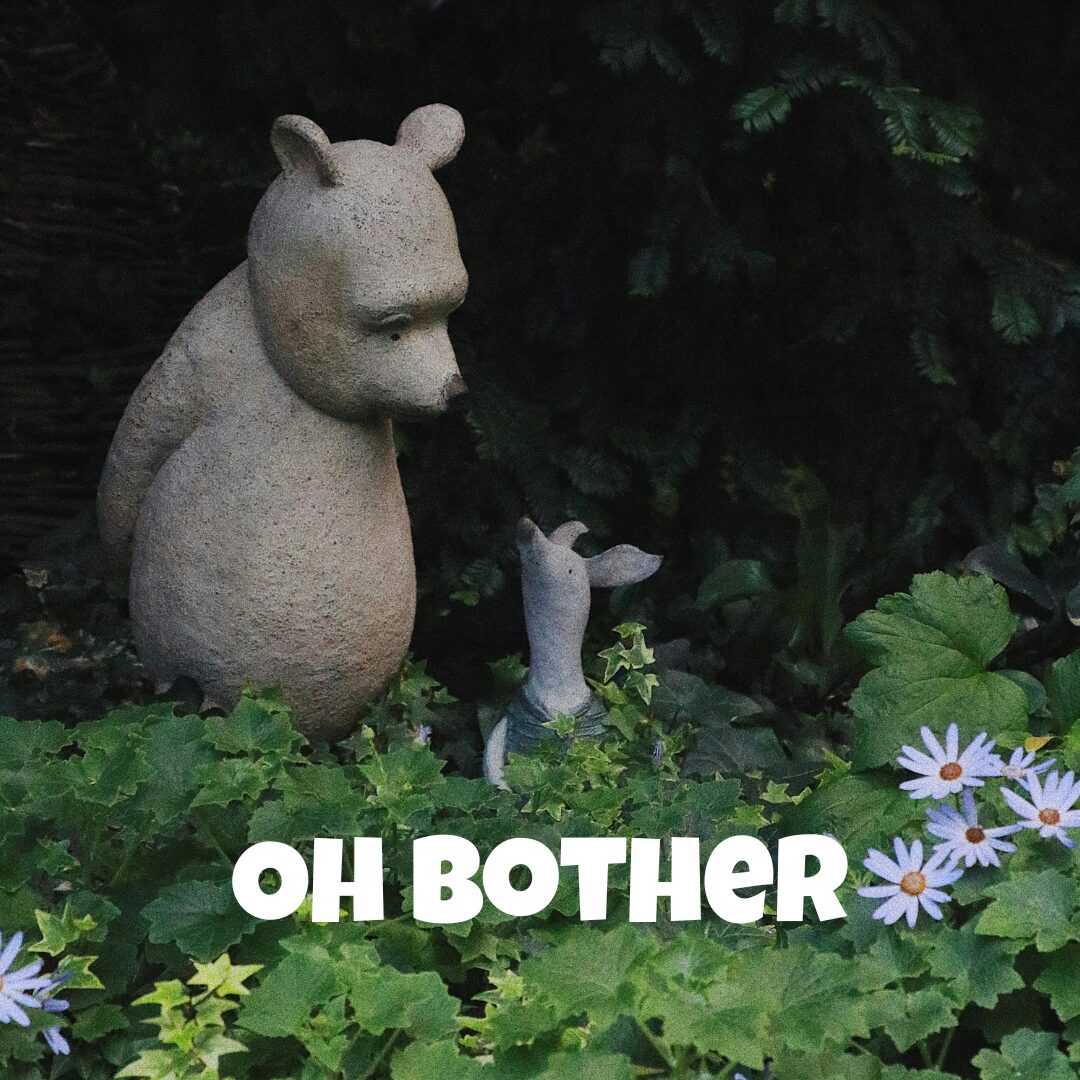
He sent me one back of Pooh bear blowing a butterfly from his nose. “No bother,” he said. When he got bothered that week, he thought of Winnie the Pooh. He lightened his heart by letting go. My client felt his way into this new life. He didn’t force it. He asked himself if it was possible to not be bothered right now.
“Is it possible to not be bothered right now?”
Could there be less bother in your life too?
This doesn’t mean you aren’t allowed to be bothered. Your mind makes a habit out of being bothered and that habit will continue to crop up, sometimes constantly. The key is seeing that you don’t have to listen to those thoughts. When you let them go, you won’t remain in a state of bother. Be less bothered by your bothered thoughts. They can pop up, but they don’t have to mean anything to you. If they aren’t a problem, then there is no problem.
You don’t need willpower. You couldn’t force bother out of your mind anyway. Start to separate stress and pressure from the circumstances of your life.
A Bother Update
I wish I could say that Frank’s week of no bother allowed him to never be bothered again. He did fall back into habitual thoughts. Some weeks he let his circumstances really get to him. We continue to work together on being more available to the moment.
When he’s not taking his upset as seriously, he gives himself the gift of presence. Presence is available to him at all times. He just needs to stop feeding his worried thoughts.
Frank agrees that realizing the futility of bother enhances the quality of his life. I have seen his life improve along with his understanding.
The day I drove my dog Watson to the animal hospital, I was able to see through my irritated mindset. I backed off from my upset thoughts to see a bigger picture. Watson passed away several years ago. Back then, I spent more of my time in the land of bother. While I don’t live in constant bother anymore, I still visit.
Bath Time Bother
Time for a bath, but my almost two year old daughter wants to put a melting otter pop on the bed. I give her an alternative. I suggest she put it on the bedside table. She points to the bed and says “there.” I say no and take the otter pop from her. Bad idea. She gets upset immediately, crying out. It’s not a fight I want to have, so I give it back. Che clutches it in her hand as I attempt to pull her shirt off. She waves her arms around to escape me. Plop. A frozen clump of purple sugar water slaps on the floor, splashing sticky drops everywhere.
I hold back a choice word or two. “Come on Bug.” I say instead. The nickname Bug stuck with her since before she started to crawl. I survey the crime scene of purple splatter. “Well, now it’s everywhere,” I say. Then I catch a whiff of a stink. “You have a poopy diaper too.” I hoist her up and bring her over to the changing table. She protests and forces herself up to sit on the changing table. It’s like trying to diaper on an angry octopus. Thankfully, my wife walks into the room. “Mommy can help you.”
My wife hears the edge in my voice and says, “Daddy’s grumpy. Let’s go take a bath.” While she gets the clothes off our daughter, I clean up the otter pop mess, saunter downstairs, and drop onto the couch. Upstairs, I hear my wife play with my daughter in the bath. I close my eyes and feel the frustration.
I try not to stoke the story of why I am upset. Instead, I go to the direct experience of feeling. For ten minutes, I let the bother flow through me. I trust that my experience will change without me having to do anything. I don’t let myself get on Facebook, my usual coping tool of distraction. Instead, I feel what it feels like to be bothered. Up in the tub, my daughter starts to ask for me. The bother feels less intense as I peel myself off the couch and walk upstairs. My wife asks what is wrong. I tell her about the challenges of scheduling a handyman to fix our broken window, my financial worries, and my long day as a stay at home dad. “It’s a whole bunch of little things,” I explain.
“You’re letting them get to you,” she says.
“I am,” I admit.
We help her out of the bath and into her evening routine. I wiggle pajamas over her head and onto her legs. I read the Bug a story called My Dad is Amazing. I don’t feel like such an amazing Dad tonight. As my wife snuggles her to sleep, I find myself in my office, putting the finishing touches on this article. The irony of editing The No Bother Challenge just after being so frustrated and upset is not lost on me.
I’m ok with being bothered, but I don’t have to stay there. The problem isn’t the otter pop. The problem isn’t the “little things.” The problem is when I let it all get to me. I want to see my upset moods with honesty, clarity, and understanding. May I accept my own humanity. If I can experience my bother with presence, I will navigate through life’s bumps more gracefully.
We will all have our mental ups and downs, but we can realize more deeply that bother is unnecessary. Upset and bother have to do with how we relate to our thinking. Life gets richer with less mental turmoil.
Ready to take the “no bother” challenge?
I challenge you to not be bothered by anything that happens this week.
Let me know how it goes.
Author’s note: I take liberties with quotations from coaching conversations. I tend to listen more than I talk, but I say more here to convey ideas. These are not verbatim. I edit and clarify my words in the writing process. I receive permission from my clients to share ideas from our coaching sessions. A huge thank you to my clients for opening themselves up to me and to you. Coaching and transformation is an act of co-creation, and I couldn’t do it without you. These are more your insights than mine. I appreciate you for sharing this space with me. Thank you.
For less mental tension and a richer experience of life, explore more articles. Have questions? If you would like to connect, let me reach out to you. Don’t miss a post! Sign up for my mailing list and get Insights in your Inbox.
Leave a Reply